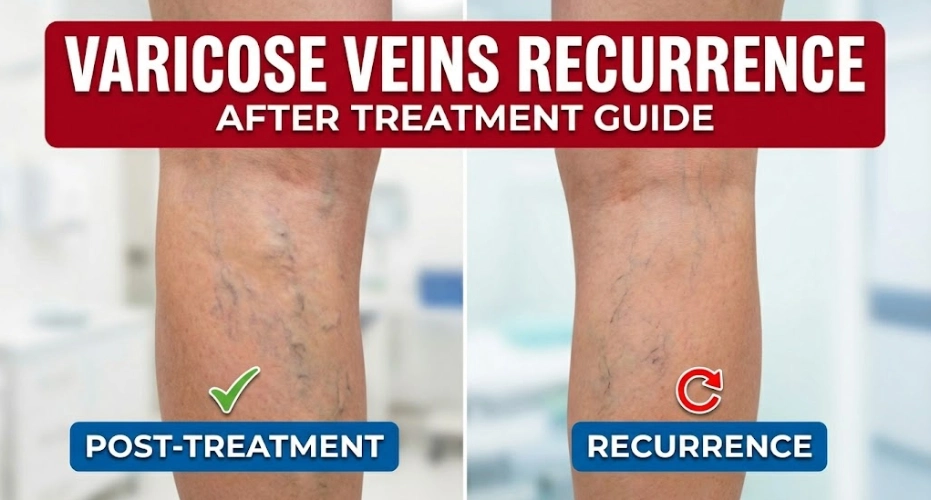
Coming out of varicose vein struggles after treatment is like achieving something big. Pain is reduced, the appearance of the legs improves, and things get easier. Then, a little blue vein or pain appears, giving life to all the old apprehensions. Indeed, many patients feel confused and wonder why the problem has returned after such medical care.
Understanding the recurrence rate of varicose veins after surgery is important, as many people assume the condition is completely cured once treatment is done. In reality, varicose veins can reappear over time. The body changes, vein walls may weaken again, and blood flow patterns can shift. Sometimes, new veins become affected rather than the originally treated ones.
This varicose veins guide explains what patients should know after treatment, the steps worth noticing, and simple steps that may help slow down recurrence. Your veins could be giving early signs that should not be ignored.
About Recurrent Varicose Veins
Recurrent varicose veins after surgery are veins that appear again after treatment. They come back in the same area or in a new part of the leg. This may occur, for example, if the first treatment does not correct the problem vein or if a vein develops where it was not treated initially. Family histories make a person more prone to getting recurrent conditions since this affects the vessel walls. Of course, daily habits and changes within the body also matter.
The increase in standing and sitting postures for an extensive amount of time, weight increase, pregnancy, and hormonal changes result in increased pressure in these leg veins, and they start to swell up. The patients experience these symptoms by showing pain and protrusion of the veins. This problem persists during work, walking, and rest. Knowing the reason why varicose veins come back is a good start for a patient to work together with their healthcare provider and take better care of themselves.
Why Do Varicose Veins Return After Treatment?
There are a number of explanations for why varicose veins can recur following treatment. It is valuable for patients to have a comprehension of this.
- Incomplete Treatment of Source Vein
Varicose veins tend to develop as a result of problems with deeper veins, like the great saphenous vein or small saphenous vein. Treating the superficial veins alone without addressing issues with the major offending veins will cause new varicose veins to develop.
- New Vein Weakness (Neovascularisation)
New small veins can grow near the treated area after treatment. This is called neovascularisation. These new veins may also have weak valves and could result in recurrence.
- Genetic Predisposition
Varicose veins run in families and, therefore, people suffering from varicose veins may develop new varicose veins even after receiving medical interventions due to genetic factors in the vein walls.
- Progression of Venous Disease
In chronic venous disease, progress towards complications can be slow. New veins may become incompetent with the passing of time, even if previous veins were treated. The varicose veins laser treatment guide describes that when valves become weak, blood can pool inside the veins and this pooling is what causes varicose veins to come back.
- Lifestyle and Work-Related Factors
Leg veins get more pressure when we sit or stand for a long time. Hardly moving, gaining weight and not practising any physical activity are the factors that lead to relapse after the treatment.
- Pregnancy and Hormonal Changes
Hormones affect veins and blood flow. Pregnancy increases blood volume and pressure in the leg and pelvic veins. New varicose veins may appear during later pregnancies, even after past treatment.
- Obesity and Excess Weight
This puts extra strain on the veins in the legs. This may expand veins and further damage their valves, leading to recurrence.
- Ageing and Natural Degeneration
With increasing age, veins lose strength and elasticity. It is accompanied by a simultaneous weakening of the valves. These natural changes have to do with the development of new varicose veins.
- Inappropriate or Outdated Treatment Modalities
Traditional methods that involve the treatment of only the visible varicose veins might not provide long-lasting solutions. Advanced varicose veins diagnosis and treatment, such as endovenous laser therapy, in addition, treat the full extent of the vein and reduce the recurrence of varicose veins.
Prevention Measures to Avoid the Recurrence of Varicose Veins
Following a Healthy Lifestyle
- Regular Exercise and Weight Problems: Regular physical activities increase blood circulation and tone muscles in the legs.
- Avoiding Prolonged Sitting or Standing: Taking breaks to move can improve blood flow. Jobs with higher risk include
- Retail and hospitality
- Healthcare
- Administration and IT
- Hairdressing and barbering
- Truck driving
- Teaching and so on.
Moving often during work hours helps prevent early stage varicose veins symptoms. Small walk trips, stretching exercises, and simple leg movements can be effective for the free flow of blood. Climbing stairs instead of elevators and changing positions while sitting can also be effective for the health of the veins. Small movements can reduce vein pressure as well as the risk of swelling for longer working hours.
- Leg Exercises: When raising your legs, it’s best to have them higher than your heart level. This will reduce swelling. Other leg exercises, such as ankle and calf rotations, also improve circulation.
- Wearing Compression Stockings: Compression stockings can provide considerable support to the veins and aid in the upward movement of blood. They also prevent recurrent varicose veins.
Treating Underlying Venous Insufficiency
- Seeking Comprehensive Treatment from a Vascular Specialist: Full vein testing from a trusted varicose veins doctor in Mumbai helps treat both visible veins and deeper faulty veins, which lowers the chance of recurrence.
- Understanding the Importance of Addressing Venous Reflux: Backward blood flow causes pressure inside veins. Closure of the defective veins using the minimally invasive procedures plays an important role in varicose veins complications and preventions while also providing effective symptom relief.
- Exploring Minimally Invasive Treatment Options: Many treatment options include procedures like sclerotherapy and ambulatory phlebectomy that involve the removal of problematic veins through minimally invasive procedures.
Managing Risk Factors and Triggers
- Excess Weight: Excess weight increases pressure levels within leg veins. A healthy diet and physical activity can manage this risk factor.
- Tight-Wearing and High-Heeled: The blood circulation is hampered when you wear tight clothes. High-heeled shoes restrict the movements of calf muscles, and thus, the blood circulation is reduced.
- Sedentary Lifestyle: Taking short walks and doing stretching exercises during long working hours are great for enhancing blood circulation.
- Skin Care: Skin that is clean, moisturised, and healthy will greatly reduce the chances of infections, which are very likely to worsen varicose vein conditions.
To Sum Up
Varicose veins may recur even after varicose vein surgery. For the long-term care of this problem, it is important to be aware of the causes and signs. At the same time, it is important to get regular visits from a doctor for the proper treatment and diagnosis of the problem.
Dr. Kunal Arora is a vascular and interventional radiologist in Mumbai. He has more than 8 years of superspeciality practice and a total of 12 years of experience. Our expert uses only minimally invasive treatments for the treatment of varicose veins. Apprehensive patients regarding recurrence can avail themselves of expert advice and regular follow-up with us.
Book an appointment to discuss prevention, monitoring, and suitable treatment options for better vein health.