
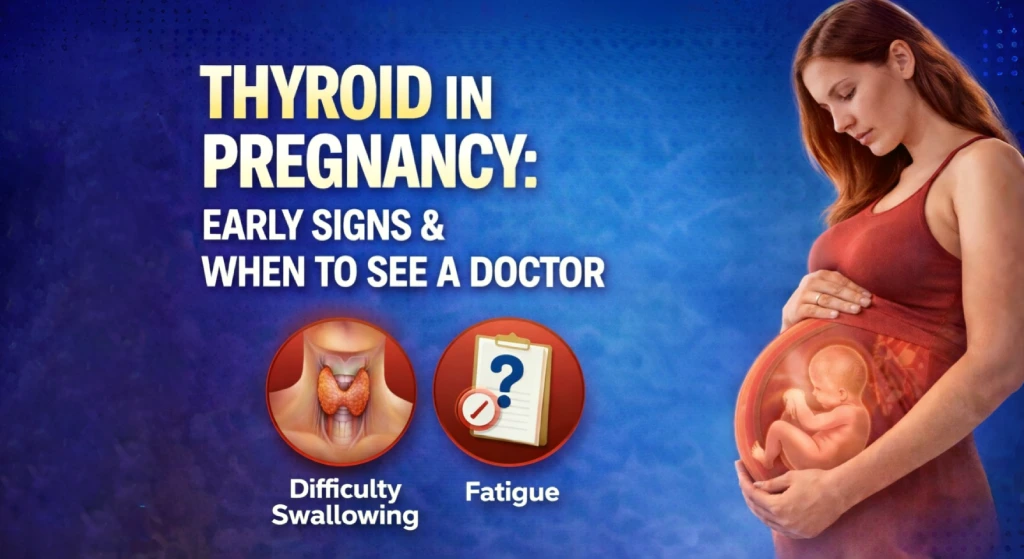
The thyroid plays a crucial role in ensuring general wellness. But its significance becomes much higher when it comes to pregnancy. Proper hormonal balance is essential not only for the mother’s well-being but also for the healthy development of the fetus. This makes monitoring thyroid function an important part of prenatal care.
Many women do not notice early symptoms when it comes to thyroid and pregnancy, as the signs can often be subtle and easy to miss. The condition may exist even before conception or develop during pregnancy, sometimes without showing any clear or noticeable symptoms at all.
Definition of Thyroid
The thyroid gland is defined as the endocrine gland shaped like a butterfly that exists in the front part of the neck. It produces hormones that regulate many essential body functions, including metabolism and heart rate.
There are situations when the thyroid gland releases too many hormones or not enough hormones. The result is thyroid disease. There are some women who can already be suffering from a thyroid disease even before they get pregnant. But then, there are women who suffer from a thyroid problem only when they are pregnant or even later on during their childbirth period.
How Are Thyroid Problems Identified in Pregnant Women?
There is no set procedure for testing the performance of the thyroid gland in every case of pregnancy. Certain conditions that necessitate testing include:
- Present Symptoms: Appearance or presence of visible thyroid symptoms in pregnancy
- Previous Thyroid Condition: A history of disease makes monitoring necessary
- Conditions Associated with Greater Risks: Such as diabetes and autoimmune diseases
The blood test is done to check hormone levels and the TSH level. This TSH will assist in controlling the levels of hormones that are released from the thyroid glands. The test will be highly accurate, and the doctors can determine whether they should prescribe any medication or consider other methods such as thyroid nodule microwave ablation in Mumbai. If you have any issues regarding your thyroid glands, you must see a doctor.
Could You Develop Thyroid Disease During Pregnancy?
There are specific issues that can make people susceptible to thyroid in pregnancy. They include:
- Already receiving treatment for a thyroid condition
- History of thyroid disease, including after childbirth
- Autoimmune disorders or family history of thyroid-related autoimmune diseases such as Graves’ disease or Hashimoto’s disease
- Presence of type 1 diabetes
- Previous neck irradiation or treatment of hyperthyroidism
If one or more of the above risk factors are present, a medical check-up becomes essential, as early detection plays a key role in effective management. It also helps in accurately identifying the condition, including understanding the difference between a thyroid nodule and thyroid cancer.
Symptoms of Thyroid Problem
Symptoms of hyperthyroidism (overactive thyroid gland)
- Hair becomes very fragile and thin
- Goiter
- Graves’ ophthalmology. This condition can cause your eyeballs to bulge out and your eyelids to pull back. It can cause your eyes to be red and painful, and can cause vision problems
- Losing weight quickly or not gaining enough weight during pregnancy
- Shaking hands and fingers
- Thinning skin
The symptoms of high thyroid levels during pregnancy include:
- Increased sensitivity to heat or excessive sweating
- Mood changes such as being nervous, being irritable, or feeling moody
- Menstrual cycle changes prior to becoming pregnant
- Rapid heartbeat (tachycardia), abnormal heart rhythm (arrhythmia), or rapid heartbeats (palpitations)
- Frequent bowel movements
- Weak muscles
- Difficulty sleeping or insomnia
How Can Hyperthyroidism Affect Pregnancy?
Uncontrolled or badly controlled hyperthyroidism can result in severe thyroid effect on pregnancy
- Preeclampsia is an instance of high blood pressure that happens after 20 weeks of pregnancy or post-delivery.
- Pulmonary hypertension involves blood vessels in the heart and lungs.
- Placental abruption refers to premature separation of the placenta.
- Heart failure involves poor pumping capability of the heart.
- Thyroid storm is a rare but fatal case of hyperthyroidism that manifests through rapid symptom onset.
Other complications for the baby include:
- Preterm birth
- Goiter
- Low birthweight
- Miscarriage or stillbirth
What Are the Signs and Symptoms of Hypothyroidism?
Signs of hypothyroidism (underactive thyroid) include:
- Dry skin or dry, thinning hair
- Goiter
- High cholesterol
- Hoarse or husky voice
- Slow heart rate
- Sweating less
- Weight gain and puffy face
Symptoms of hypothyroidism include the following:
- Being more sensitive to cold
- Constipation
- Depression
- Fatigue
- Pain or stiffness in muscles or joints, weakness in muscles or cramping
- Memory problems or inability to concentrate
- Any problems associated with periods or fertility issues
In What Ways Can Hypothyroidism Impact Pregnancy?
Failure to treat hypothyroidism in pregnancy could lead to the following:
- Anaemia, where the body does not have enough healthy red blood cells
- Gestational hypertension that develops during pregnancy
- Preeclampsia
- Placental abruption
- Postpartum haemorrhage, involving heavy bleeding after delivery
- Myxedema, a rare but severe condition caused by untreated hypothyroidism
- Heart failure
Problems for babies include:
- Infantile myxedema, leading to developmental challenges
- Low birthweight
- Issues with growth and brain development
- Thyroid disease caused by the passing of antibodies across the placental barrier
- Miscarriage or fetal death
Contact a Healthcare Professional During Pregnancy
Hormones from the thyroid gland become more necessary at the onset of pregnancy, normally during the initial five to six weeks of gestation. This is essential to ensure the well-being of both the mother and the baby.
In case women are under the influence of medicines due to thyroid diseases, then changes in dosages are inevitable during pregnancy. The proper monitoring of thyroid during pregnancy process helps to achieve the desired result.
Medical consultation is crucial when there are any signs of hyperthyroidism or when there is a medical history of the same. The interventional radiologist in Mumbai may recommend a physical examination along with blood tests to accurately diagnose the disorder and initiate appropriate treatment.
Conclusion
The health of your thyroid gland will be crucial in establishing how your pregnancy goes, but most women won’t be able to spot the signs until they start experiencing difficulties. Early detection and regular testing of thyroid disease in pregnancy can prove to be quite useful when dealing with either version of the illness, thereby reducing risks for both parties involved.
Professional assistance of experts such as Dr. Kunal Arora from the Endovascular Care Centre pays special attention to using only safe and effective treatments for various diseases, which include thyroid embolization without surgery.
An initial consultation will definitely prove beneficial. Schedule your appointment now and talk about your symptoms!