
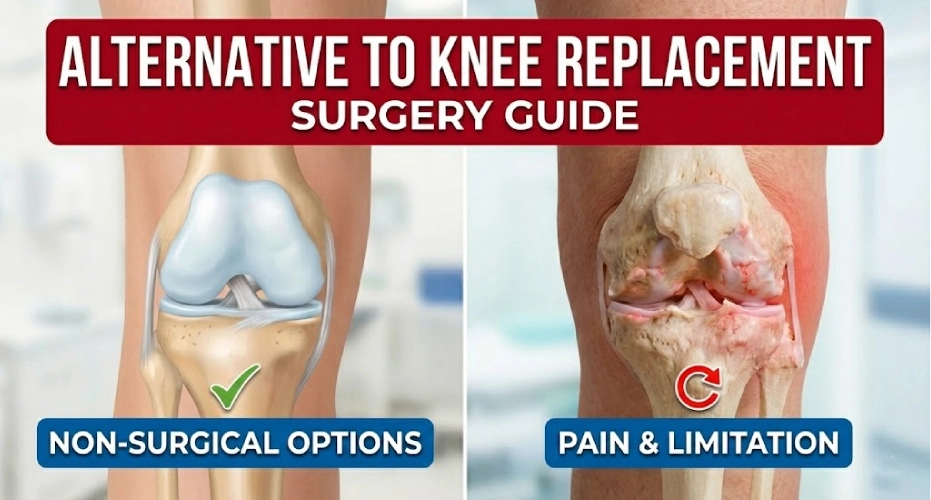
Knee pain can make everyday life difficult. Simple actions like walking, sitting, or using stairs may start to hurt. Knee replacement surgery feels big and frightening for many people. Moreover, high cost and long rest time make people look for alternative options. Further, relief does not necessarily require surgery.
Today, advancements in the medical industry offer non-surgical procedures to avoid knee replacement surgery that reduce pain and facilitate each movement. The procedures are meant to improve knee health and comfort without surgery or long hospitalisation.
This blog explores safe and helpful non-surgical knee treatments used today. You will learn what types of care are appropriate for relieving early pain, which types may be beneficial in relieving stiff knee joint issues, and how the care plan fits into your lifestyle. Read on to learn which types may be effective before you seriously consider having your knees replaced.
Common Problems Due to Unaddressed Knee Issues
Nevertheless, it is important to note that knee pain does not only affect the human body since it also affects an individual’s mood, routine, and self-confidence, among many other aspects. Disregarding knee pain always leads to a worsening situation.
- Loss of Mobility and Independence
Even simple movements such as standing up from a bed, walking and bending become a problem. Inactivity contributes to weak muscles and stiff joints.
- Persistent Pain and Inflammation
The small pain may become constant pain. Swelling and cartilaginous problems may cause arthritis, which may finally end up being knee replacement surgery.
- Emotional and Mental Stress
Daily pain can cause frustration and sadness. Many people feel upset when they cannot enjoy normal activities.
- Postural Imbalance and Back Pain
Putting more weight on one knee changes body balance. This can strain the back and hips, causing new pain.
- Increased Risk of Surgery
Waiting too long allows more joint damage. Surgery may become the only option. Early care may help avoid this.
The good news is that surgery is not always needed first. Many non surgical knee pain relief options and minimally invasive treatments can help.
Alternative to Knee Replacement Surgery
Physical Therapy
Physical therapy is another form of alternative treatment. Physical therapy is mostly preferred as a non surgical option for knee arthritis instead of undergoing a knee replacement operation. Physical therapy comprises exercises that assist in improving strength, balance, and various joint movements. A personal plan is developed based on individual requirements.
It helps relieve pain caused by arthritis or injury and increases the support around the knee. It can be seen in a few weeks by carrying out exercises. It may include massage, stretching, and proper movement, among others. It helps individuals perform daily activities. Strong muscles help in controlling knee pain and also offer protection.
Regenerative Medicine
Regenerative medicine utilises the healing ability of the body. Platelet-rich plasma injections are used to assist regeneration. Stem cell therapy helps to develop healthy tissues that replace the damaged tissues.
Regenerative medicine is ideal for someone with early to moderate arthritis or joint problems. The therapy assists in reducing swelling and improving movement. Many patients choose to undergo this therapy to avoid or at least delay, such a knee replacement operation.
Hyaluronic Acid and Cortisone Injections
Pain and swelling are controlled by injections. Cortisone injections reduce inflammation and give temporary pain relief. Hyaluronic acid injections add more lubrication to the knee joint and improve smooth movement.
Such treatments will help people seeking relief for a few weeks or months. Hyaluronic acid works best in early osteoarthritis. Doctors can recommend these injections for symptom management without surgery.
Bracing and Orthotics
Knee braces and orthotic devices reduce pressure on injured and damaged areas. These devices assist in distributing body weight. In addition, bracing helps in balancing weight and ensuring balance.
These braces suit people who suffer from minor arthritis problems and unstable knees. They provide instant comfort during walking and standing. In most cases, bracing goes hand in hand with injections and physical therapy.
Weight Management and Nutrition
The pressure increases on the knees with each extra pound. When weight loss occurs, less stress is placed on the joint, and cartilage damage is slowed down. Healthy foods filled with fruits and vegetables, as well as protein and fats, help maintain joint health.
Omega-3 helps prevent swelling in the knee. Controlling weight is one of the greatest ways to protect the knee in the future, especially if the reason for pain is weight-related.
Acupuncture and Electrotherapy
Acupuncture utilises small needles at special points, and these will relieve pain and increase the flow of blood. Electrotherapy is a form of treatment for painful conditions via mild electrical signals to muscles and nerves.
Results are different in each person, but many people have reduced pain and better mobility subsequent to regular treatment with either modality. These treatments are often used in conjunction with either physical therapy or medicine. Such combined care has often improved comfort and recovery.
Supplements and Natural Remedies
Glucosamine and chondroitin assist with cartilage health. Turmeric and omega-3 are anti-inflammatories.
There are no quick fixes. However, they may alleviate stiffness and pain if taken over time. This will normally become apparent within a few weeks. Exercise and a good diet assist supplements more.
Lifestyle Modifications
Daily habits have a great influence on knee health. Staying away from high-impact activities reduces joint stress. Soft footwear promotes support by improving posture and comfort. Long-standing issues should be avoided as much as possible.
Low-impact exercises such as swimming and cycling also maintain the mobilisation of the joints without putting heavy pressure on them. These modifications delay surgery for a long time and, hence, are helpful for an early stage of osteoarthritis. Small steps go a long way in producing noticeable comfort.
Radiofrequency Ablation
Radiofrequency ablation is another alternative to knee replacement surgery that targets nerves around the knee. A thin needle sends heat through radiofrequency waves to block pain signals for some time.
Pain relief can last several months or up to a year. RFA suits people who cannot have surgery or want to delay it. This method focuses on pain control instead of joint replacement.
Minimally Invasive Knee Replacement
Minimally invasive techniques are designed to reduce tissue damage while alleviating joint pain. These involve using small incisions, preserving surrounding muscles, and often result in less blood loss and faster recovery compared to traditional surgery.
In addition to minimally invasive knee replacement, advanced image-guided procedures such as radiofrequency ablation and genicular artery embolization in Mumbai help relieve pain without removing the joint. These treatments are particularly beneficial for patients who want to delay or avoid full knee replacement surgery.
Simply, minimally invasive and non-surgical options can provide pain relief with reduced recovery time and lower procedural risk.
When to Rethink Avoiding Surgery
Nonsurgical treatments help many people, but surgery may still be needed in some cases. Long delays can cause more joint damage and lower movement ability. A knee specialist can decide the right time for treatment. Proper testing helps choose the best alternative to knee replacement based on the condition and daily needs.
Bottom Line
Nonsurgical treatment is what mostly assists in alleviating knee pain without surgery. These treatments consist of injections, physical therapy, lifestyle modification, and radiofrequency ablation therapy. These offer relief from pain, make movement easy, and reduce the deteriorating effect on your joints. Minimally invasive treatment is a solution for patients with osteoarthritis, especially those who see little relief from medicine and physiotherapy.alt
Dr. Kunal Arora is a vascular and interventional radiologist in Mumbai with more than twelve years of experience and over eight years of superspeciality practice. He reviews pain level, daily activity, and past treatments before suggesting the right treatment. Image guidance and personalised planning support safer care and long-term joint health.
Book a consultation to discuss suitable treatment and get comfortable again on the move without undergoing knee replacement surgery.