
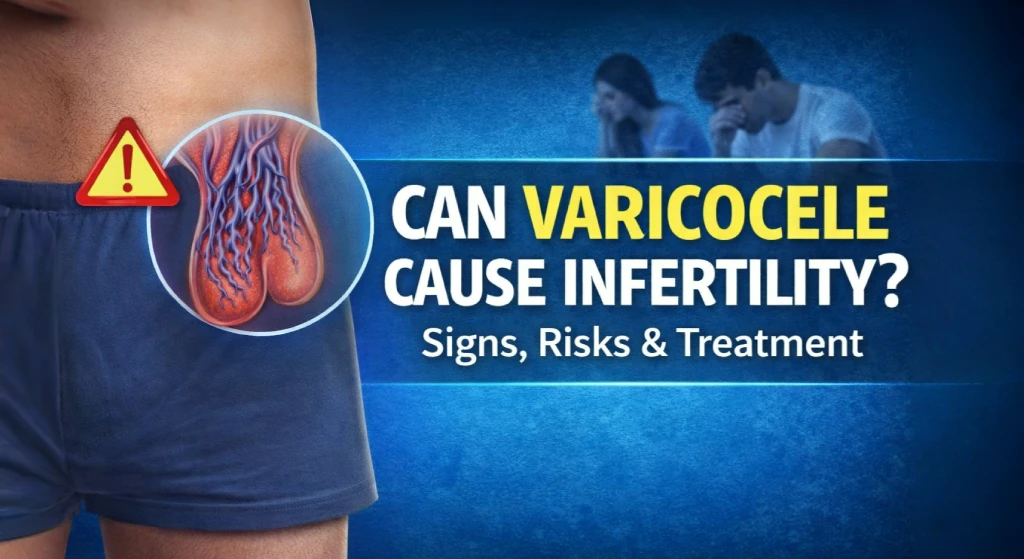
Varicocele is more common than many men realise, yet it often goes unnoticed in the early stages. Since it develops slowly and rarely causes obvious symptoms, most men only find out about it during a fertility evaluation.
This condition affects the veins in the scrotum, which can interfere with normal testicular function over time. In some cases, varicocele infertility may impact sperm quality and overall fertility, making it an important concern for those planning to conceive.
Want to know its signs, risks, and treatment options? In this guide, you can find the condition early and take the necessary steps to protect your fertility.
About Varicocele
A varicocele is a collection of swollen veins in the scrotum. This sac of veins is part of the pampiniform plexus which assists the testicles through the spermatic cord. This cord has veins, arteries and nerves.
Under normal conditions, the one-way valves enable blood to flow from the testicles back to the heart. The issue begins when the one-way valves become weak and “leak.” The blood does not circulate as it should. Rather, it is collected in the veins. As a result, blood pools in the veins instead of circulating efficiently, causing them to enlarge.
The varicocele mostly occurs on the left part of the scrotum. The condition usually develops slowly and may go unnoticed for a long time, especially if symptoms are mild or absent.
Symptoms
A varicocele does not always necessarily manifest symptoms. Some men may experience minor or significant symptoms.
- Pain: A person may experience a dull ache or discomfort, especially when standing for long hours or at the end of the day. Relief is often felt while lying down
- Mass in the Scrotum: A large varicocele may look like a “bag of worms” above the testicle. Smaller ones may only be felt by touch
- Differently Sized Testicles: The affected testicle may appear smaller than the other
- Infertility: Difficulty in fathering a child may be noticed in some cases
Is a Varicocele Serious
A varicocele is not life-threatening. Daily life may not be affected in many cases. Serious concerns arise mainly when fertility becomes a priority. The condition can affect sperm production and testicular function if left untreated for a long time.
Does Varicocele Cause Infertility in Men
Here is the answer to your question: Can varicocele cause infertility? Varicocele has been identified as a common cause of male infertility. Male factors of infertility comprise one-third of cases of infertility. Among these known causes of infertility in men, varicocele ranks at the top.
Varicocele affects the quality and production of sperm because of the increase in temperature and pressure in the testicles. The normal flow of blood is necessary to create a healthy environment for the production of sperm. The disruption of this process may cause a reduction in sperm.
Can Varicocele Cause Permanent Infertility
Many people doubt does varicocele affect fertility permanently. Varicocele is considered to be a correctable cause of infertility. Many men see improvement in sperm production after treatment. Surgical correction often helps restore better function.
Improvement does not happen immediately. At least three months are needed after surgery to notice changes in sperm production. Delay in treatment, especially in advanced cases, may lead to long-term damage.
Risk Factors
There are no clearly defined or major risk factors linked to the development of varicocele. It can develop without a clear cause.
Complications
Varicocele may cause a number of complications if not closely monitored and treated.
- Poor Testicular Health: During puberty, it may cause a delay in the growth and development of the testicles. In adults, it may cause a reduction in the size of the testicles through tissue loss
- Infertility: It is not all cases that result in infertility. In 40% of men with an infertile condition, a varicocele is present
Temperature imbalance, oxidative stress and buildup of toxins are the complications that occur due to a varicocele
Can Varicocele Go Away On Its Own
Varicocele does not go away on its own. Treatment is a necessity even if the symptoms are not severe. This is because it can affect the varicocele sperm count over time.
If the condition is severe, it may result in a reduction of sperm count and a decrease in the level of testosterone. Shrinkage of the testicles and permanent damage may also occur if the condition advances further. Regular check-ups with a urologist are necessary if treatment is delayed.
Diagnosis
Diagnosis starts with a physical examination. The doctor examines the scrotum for any visible veins or structures that may have developed.
Some cases need further evaluation:
- Ultrasound helps in viewing the veins inside the scrotum clearly.
- Semen analysis is done if fertility concerns are present to assess sperm quality.
- Many men discover a varicocele only during infertility evaluation.
Treatment
Depending on the symptoms and the need for fertility, treatment may be required for the varicocele, especially for those related to varicocele and male infertility. Not all varicoceles need to be treated.
A varicocele may need treatment if:
- There is a low sperm count or other sperm problems
- There is scrotal pain or swelling
- There is unexplained infertility in the couple
There are two methods of treatment for a varicocele:
Embolisation
Varicocele embolisation in Mumbai is a minimally invasive procedure that blocks blood flow to the affected vein. A needle is inserted through the groin or neck to reach the veins. Local anaesthesia is used. The recovery process takes a short time. Normal activities can be resumed in a short while. Mild pain or tenderness can be felt for a short while.
Varicocelectomy
Varicocelectomy is a surgical procedure used to treat varicocele by blocking the affected veins and redirecting blood flow to healthy veins. It is usually performed under general or local anaesthesia, so the patient does not feel pain during the procedure.
Laparoscopic procedures are conducted by making small incisions, resulting in a short recovery period, although a lot of expertisve is required. Open procedures are conducted by making large incisions, resulting in a long recovery period.
Conclusion
Varicocele can be cured easily if detected at an appropriate time. Although symptoms are not present in the case of varicocele, it should not be ignored for the purpose of fertility. Expert advice should be taken for the best possible course of action.Dr. Kunal Arora, the best interventional radiologist in Mumbai, is leaving his mark with his expertise in vascular and interventional radiology. Take the next step towards a healthier reproductive life. Consult our specialist today.