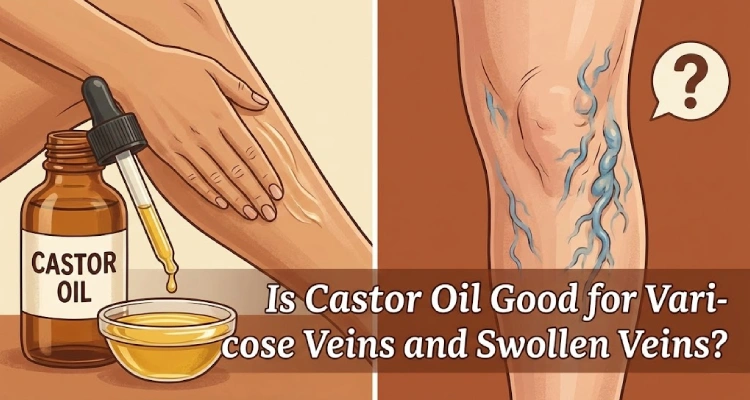
A spoonful of oil promising vein relief sounds tempting, right? Varicose and swollen veins more often come with pain, heaviness, and a hit to confidence, so such a simple home remedy feels comforting. Stories abound where castor oil acts like some sort of quick remedy that fades those bulging veins away.
The thing is, castor oil for varicose veins does have soothing and moisturising qualities that help tired skin feel better, but real vein problems run much deeper than the surface. However, it cannot fix weak valves or poor blood flow. This varicose veins guide clears up the confusion around castor oil for varicose and swollen veins, explaining what it can do for comfort and what actually works when it comes to proper care and long-term relief.
Understanding Varicose Veins
Varicose veins occur when veins become enlarged and overfilled with blood. They are usually raised, twisted, and dark blue or purple in colour. This happens when the valves in the veins weaken and cannot effectively pump blood back toward the heart. As a result, blood collects in the lower parts of the legs and creates pressure inside the vein walls. Over time, the veins stretch and lose their original shapes.
People with varicose veins often experience aching, throbbing, or burning pain, along with a feeling of heaviness in the legs after long periods of standing or sitting. Night cramps and itchy skin around the legs or ankles are also common.
Severe vein disease can even advance to skin changes, slow-healing wounds, and open ulcers near the ankles, which often need diagnosis by a varicose veins doctor in Mumbai. In addition, blood clots can develop in the skin condition. All these signs mean that varicose veins are actually beyond the skin condition itself.
What is Castor Oil?
Castor oil comes from the seeds of a castor plant called Ricinus communis. It is commonly used to relieve digestive discomfort and is also used as a hair and skin moisturiser. The thick texture of this oil is due to its high content of ricinoleic acid compounds with anti-inflammatory and moisturising properties. This oil can make skin feel smoother and even relieve skin dryness.
Recent wellness trends have renewed the use of castor oil, which promises not only to promote hair growth, treat acne, and soothe skin irritation but also to work from the outside. While it has gained interest as a potential remedy for leg veins, especially because of the sensation of soothing massage, research does not validate that castor oil really fixes early stage varicose veins symptoms or improves blood circulation.
Myths of Castor Oil for Varicose Veins
It is a common trend that natural remedies gain popularity due to their seeming gentleness and safety. Castor oil shares this image, as well. The mild anti-inflammatory properties of this oil may reduce surface irritation or dryness similar to the ingredients commonly used in topical creams, such as ginger or capsicum. That might provide a short-term illusion of relief. No study confirms that castor oil shrinks dilated veins or eliminates twisted ones.
Varicose veins are a result of malfunctioning valves located deep in the vein structure. These valves work to prevent the backward flow of blood normally. When damaged, they let blood settle, and the vein walls stretch. Pressure is developed, and thus, veins become visible through the skin. Oils and creams have no access to these valves. Surface treatments can act on skin layers alone and cannot correct defects in the internal circulation.
Many people wonder, “Is castor oil good for varicose veins?” Believing it can provide real relief may delay proper care. Symptoms may feel lighter for a short time, which encourages one to continue using it. The underlying disease is active and may progress silently. This understanding helps to avoid unrealistic expectations.
Possible Side Effects of Castor Oil
Though an organic compound, castor oil has negative side effects if consumed internally as a laxative drug. It includes cramps, vomiting, and diarrhoea. Dehydration and imbalances in bodily salts may result from its frequent use. Medical advice is required for internal consumption.
Application by the topical route usually remains non-toxic for the majority of individuals. Skin irritation, redness, and allergic reactions may occur. Patch testing diminishes this possibility. Possible moisturising benefits from the oil may help with dry or itchy skin around the veins.
Healing or shrinking varicose veins is not possible with home remedies. As any comprehensive varicose veins laser treatment guide shows, effective results require professional procedures. Pain relief via massage may be more related to the improved circulation via movement rather than the oil itself.
Why Castor Oil Cannot Treat Varicose Veins
Varicose veins occur when the valves in the veins fail to function properly. The valves cannot close properly, causing blood to flow backward and pool in the lower limbs. The walls of the veins elongate under pressure and weaken. This cannot be reversed through application to the skin.
Castor oil remains on the surface and does not enter the bloodstream. It does not fortify valve tissue or repair damaged vein walls. Smooth skin texture can create an illusion of making the veins appear a little less obvious for short-term periods. The actual size of the vein and the pressure it endures remains exactly the same. Long-term dependency on topical solutions alone can allow the vein disease to worsen.
Home Remedies Versus Professional Medical Attention
Home remedies relieve symptoms for sometime. Elevation of your legs, massage of your legs, and applying cool gels and moisturisers will reduce symptoms such as heaviness and swelling. Wearing comfortable and relaxed clothing and shoes will reduce pressure on your legs. This will make your symptoms less troublesome, but will not impact your valves.
Mistaking comfort for cure delays medical assessment. When faulty valves persist in their failure, chronic insufficiency may eventually lead to the development of the condition. Skin darkening, eczema-like patches, and open ulcers may follow. Blood clot risk is also increased. Medical evaluations detect vein damage and prevent varicose veins complications and preventions.
Professional treatment is ideal for correcting the real cause of poor circulation rather than asking is castor oil safe for veins. Ultrasound imaging identifies affected veins and guides therapy. Modern techniques aim to close or remove affected veins so healthy veins take over the blood flow. This approach restores balance rather than masking symptoms.
Effective Medical Treatment for Varicose Veins
Modern care offers many minimally invasive solutions that fix problem veins directly. The selection of varicose veins diagnosis and treatment will vary based on vein size, depth, and the health of the patient. Some of these methods are.
- Endovenous Laser Ablation Therapy: A fine fibre delivers laser energy inside the vein. Heat seals the damaged vein closed. The blood then reroutes to healthy vessels.
- Ultrasound Guided Sclerotherapy: A special medicine is injected into the affected veins. This causes the veins to collapse and gradually disappear from the body.
- Glue Closure System: Medical adhesive closes the diseased vein. Blood vessels divert to healthy veins without the use of heat or foam injections.
- Ambulatory Phlebectomy: Small surface veins are surgically removed through a small opening in the skin. This method often works alongside EVLA for visible veins.
Conclusion
Castor oil for swollen veins or varicose veins can ease skin irritation and reduce pain associated with the condition, but this does little to heal faulty vein valves. Not even diet and lifestyle changes can counteract faulty circulation on their own. Dr. Kunal Arora, a well-known Vascular and Interventional Radiologist in Mumbai, India, presents you with a cure for varicose vein issues and discomfort through minimally invasive techniques. So book your appointment now at our clinic that provides a proper evaluation and a plan of action that ensures your health and well-being, along with your comfort, remain a top priority.