
Diabetic Foot Ulcer Treatment in Borivali
Get the best diabetic foot ulcer treatment in Borivali from Dr. Kunal Arora. Receive timely and personalised care to support wound healing and reduce complications. Book your consultation today.
What is Diabetic Foot Ulcer?
Diabetic foot ulcers are those ulcers that keep forming on your foot. These can affect those parts of your feet that are under pressure or friction. The reduced sensation and the slow-healing process due to diabetes can allow any small issue like cracks in skin or even minor cuts to develop into infections.
Dr. Kunal Arora, a trusted diabetic foot ulcer specialist in Borivali, offers expert treatment for diabetic foot ulcers. Book an appointment now.
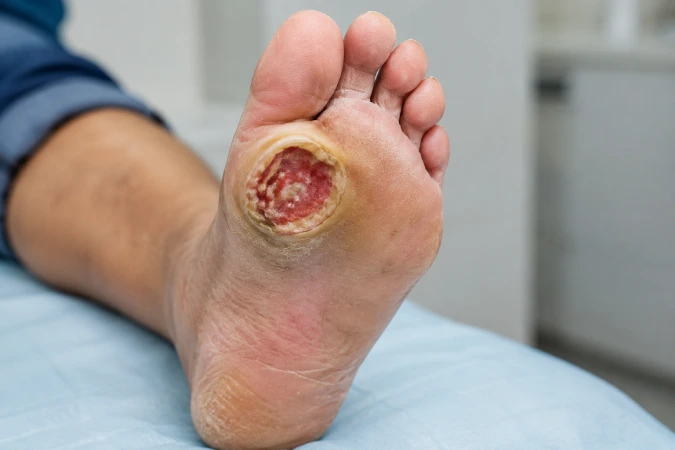
What causes diabetic foot ulcers?
The reasons why ulcers occur because of diabetes are:
- High Blood Sugar: Slows down the process of tissue repair and wound healing.
- Poor Circulation: Inability to transport necessary oxygen and other nutrients for healing to the required sites.
- Nerve Damage: Decreases foot sensation and thus injuries are not detected early enough.
Even small injuries like cuts, blisters or cracks on the skin can go undetected and become worse slowly. Poor circulation can slow down the process of wound healing further and increased sugar levels may lead to infections.
Visit Dr. Kunal Arora to treat your diabetic foot ulcers in Borivali.
Symptoms of Diabetic Foot Ulcer
Diabetic foot ulcers may arise from simple cuts, blisters or cracked areas of skin, usually occurring on the sole or areas where pressure is applied. Nerve damage can lead to numbness thus allowing the wound to develop without any pain. Poor circulation can cause delayed healing and make infection more likely.
Common symptoms include:
- Failure of the wound or sore to heal
- Redness, swelling, and warmth of the affected area
- Discharge of fluid or foul-smelling discharge from the wound
- Pain or hardening of the tissues around the ulcer
- Darkened and thickened skin around the wound
- Blue, purple, or black changes of the toes or foot
- Fever and chills when an infection develops
Dr. Kunal Arora, an expert diabetic foot doctor in Borivali, offers specialised diabetic foot ulcer treatment. Book a consultation today for timely evaluation and care.
How Are Diabetic Foot Ulcers Diagnosed?
Diagnosing diabetic foot ulcers involves a complete examination of the wound and its condition as well as identifying any factors that may slow down healing. Early identification can reduce the risk of infection and other complications. Doctors use a combination of a general physical examination and nerve, circulation and infection testing.
Visual Inspection of the Ulcer
The physician examines the wound’s location, size, depth, colour and appearance. The skin around the wound is inspected for any signs of inflammation, swelling, warmth, exudate, and other evidence of possible infections. The wound can be measured and recorded to monitor healing progress.
Testing the Nerve Function
Diabetes can lead to nerve destruction and loss of sensation in the feet. A healthcare practitioner can conduct a monofilament test, vibration test or another neurological examination to assess whether the patient can feel pressure or touch.
Evaluation of Blood Circulation
Poor blood flow may interfere with wound healing. A medical professional can examine your foot’s pulses and perform various tests including the ankle brachial index or Doppler ultrasound.
Diagnosis of an Infection
You will be asked for a blood test or a sample taken from the incision area. Signs of infection include redness and fever.
Diagnostic Imaging
X-rays or an MRI, among other diagnostic tests, can establish the seriousness of the illness.
Dr. Kunal Arora provides advanced diabetic foot infection treatment in Borivali. Book a consultation today for personalised evaluation and treatment.
How to Reduce the Risk of Diabetic Foot Ulcers
Several methods can be employed to decrease the pressure on susceptible sites and address problems that predispose an individual to developing diabetic foot ulcers:
- Reducing pressure points: This is done to reduce pressure on the fragile areas by either removing or rounding off any bony prominences.
- Treatment of foot deformities: Bony deformities such as bunions and hammer toes may require correction to prevent pressure points.
- Managing Charcot foot: Proper management will help in stabilising the foot and preventing any further damage.
- Improving blood flow: Proper endovascular procedure, stenting, or arterial bypass may be required for managing the peripheral vascular conditions.
Consult Dr. Kunal Arora for expert diabetic wound care in Borivali. Book your appointment today.
Why Choose Dr. Kunal Arora for Diabetic Foot Ulcer Surgery?
- Extensive Experience
Our interventional radiologist in Mumbai brings over 12 years of overall medical experience, including more than 8 years of specialised expertise in Vascular and Interventional Radiology. - Advanced Expertise
Our physician has specialized knowledge of advanced vascular procedures and uses minimally invasive methods to treat various blood vessel disorders, as well as diabetic foot. - Research & Awards
We contribute to medical research through awards and presentations in radiology at the national and international levels. - Patient-Oriented Treatment
We adopt a patient-oriented strategy of personalized assessment and treatment planning to ensure that our patients get timely treatment based on their own vascular problems.
Dr. Kunal Arora treats diabetic foot ulcers in Borivali. Contact us now.