
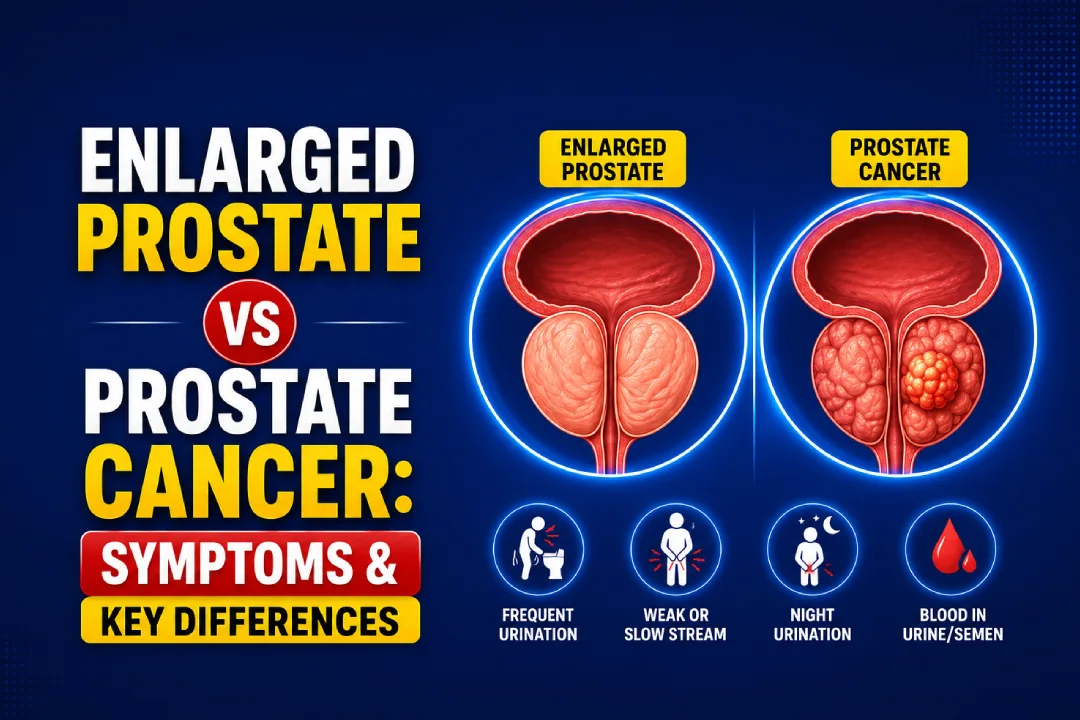
As men age, they may experience changes in urination, such as a weak urine stream, frequent urination, and the need to wake up several times during the night to urinate.
However, many men take these signs lightly, believing they are simply symptoms of getting older yet sometimes it may be important to consider other causes as well.
One question that men often wonder about is the difference between prostate enlargement vs prostate cancer since these two conditions affect the same gland, resulting in similar urinary issues.
What Exactly is the Prostate
The prostate gland is a very small gland found only in men, situated just below the bladder. It encircles the urethra, which is the channel through which urine passes out of the body. The primary function of this gland is to produce fluid that constitutes semen.
The prostate gland should normally be the size of a walnut in young people. Nevertheless, the ageing process causes the gland to swell, which is a condition referred to as benign prostatic hyperplasia.
Symptoms of Enlarged Prostate and Prostate Cancer: Reasons for Their Similarity
Symptoms of Enlarged Prostate
When the prostate swells the pressure on the urethra increases. This makes it hard for urine to pass through. Symptoms of enlarged prostate usually appear slowly and may include
- Trouble urinating
- Weak urine stream
- Dribbling after passing urine
- The sensation of incomplete emptying of the bladder
- Sudden need to pass urine
Most males get used to these changes and don’t really understand how different their habits have become.
Prostate Cancer Symptoms
In its early stages, there may be no symptoms of prostate cancer. If the disease progresses, the symptoms may include
- Difficulties with urination
- Presence of blood in urine or semen
- Pelvic pain
- Bone pain in advanced stages
- Unexplained weight loss
- Erectile dysfunction
Although Prostate cancer vs enlarged prostate symptoms are similar, they are different conditions that require different approaches to diagnosis and treatment.
Enlarged Prostate vs Prostate Cancer: What’s the Difference
While the two conditions have a connection to the prostate gland, there is one thing that sets them apart regarding features and treatment methods.
Benign prostatic hyperplasia is a non-cancerous growth of the prostate gland leading to blockage of the urethra. It does not spread anywhere else in the body.
Prostate cancer is characterised by the uncontrolled development of abnormal cells in the prostate. There are some forms of cancer that grow slowly, and some that become aggressive and metastasise.
An enlarged prostate is considered to be a risk factor for developing cancer. However, such conditions can occur separately, but there are cases when both exist together. The distinction between a benign enlarged prostate vs prostate cancer is crucial because patients can undergo appropriate examinations instead of thinking they have cancer.
| Feature | Enlarged Prostate (BPH) | Prostate Cancer |
| Nature | Non-cancerous enlargement | Cancerous tumour |
| Typical Age | Usually after 50 years | Risk increases after 50 years |
| Growth Pattern | Slow enlargement | Slow or aggressive growth |
| Urinary Symptoms | Common | May appear later |
| Blood in Urine | Less Common | May occur and requires evaluation |
| Health Risk | Usually not life-threatening | Can become serious without treatment |
What Causes an Enlarged Prostate
The precise cause of prostate enlargement remains unclear, but ageing and hormonal changes are believed to play major roles. Several factors can increase the likelihood of developing this condition, including:
- Advancing age
- Hormonal changes involving DHT
- Family history
- Excess body weight
- Limited physical activity
- Diabetes and metabolic disorders
Some men also notice worsening symptoms after consuming excessive caffeine, sitting continuously for long periods or travelling frequently. Understanding BPH vs prostate cancer starts with recognising that BPH develops through non-cancerous tissue growth rather than abnormal cancer cells.
What Causes Prostate Cancer
Prostate cancer develops because of abnormal genetic changes that cause prostate cells to grow uncontrollably. Several factors are associated with an increased risk, including
- Older age
- Family history of prostate cancer
- Obesity
- Tobacco use
- High-fat dietary patterns
- Certain inherited genetic mutations
Although age remains one of the strongest risk factors, regular health evaluations help identify the disease before symptoms become severe.
Diagnosis
Symptoms can be ineffective in differentiating between an enlarged but normal prostate and prostate cancer. A variety of tests are typically recommended by doctors to identify the problem.
Diagnostic Tests
- PSA Blood Test – This test measures the level of prostate-specific antigen. The level of the antigen can be increased both in an enlarged prostate and prostate cancer
- Digital Rectal Examination (DRE) – With this test, the doctor can measure the size, firmness and texture of the prostate
- Ultrasound or Magnetic Resonance Imaging (MRI) – These imaging tests can be used for examining the enlargement of the prostate
- Biopsy – Prostate tissues are taken to confirm cancer
Treatment for Enlarged Prostate
Treatment depends on symptom severity and the extent to which daily life is affected.
Lifestyle Modifications
Doctors usually advise taking simple changes in lifestyle, such as:
- Caffeine and alcohol restriction
- Fluid reduction during evenings
- Healthy body weight maintenance
- Regular physical activity
- Bladder training exercises
These changes might help improve the patient’s condition without further treatment.
Minimally Invasive Procedures
Persistent symptoms may require minimally invasive procedures such as:
- Laser prostate surgery
- UroLift procedure
- Transurethral Resection of the Prostate (TURP)
- Rezum water vapour therapy
These treatments often provide effective relief while allowing quicker recovery than traditional surgery.
Prostate Cancer Treatment Options
Treatment depends on the stage of cancer, overall health and tumour behaviour.
Available options include:
- Active surveillance for slow growing cancers
- Surgical removal of the prostate
- Radiation therapy
- Hormone therapy
- Chemotherapy for advanced disease
Modern treatment approaches have significantly improved outcomes particularly when cancer is detected at an early stage.
When Should You See a Doctor
Urinary evaluation should never be delayed in the event of persistent or worsening urinary symptoms. Timely evaluation of prostate enlargement causes & symptoms leads to better treatment results for an enlarged prostate gland and prostate cancer.
See your healthcare provider in case of:
- Urine retention
- Urine containing blood
- Increased nighttime urination
- Changes in urinary habits
- Pelvic pain
- Unexpected weight loss
- Increased urination frequency
Immediate evaluation will help find the cause of your problem and get timely treatment.
Conclusion
Changes in urine-related behavior should not be disregarded because they happen in a person who is already old. Knowing the difference between enlarged prostate and prostate cancer will enable males to recognize that these are separate circumstances despite having the same symptoms. A correct diagnosis from proper evaluation is essential in providing treatment in the most effective way possible.
Seeking medical help early will ensure the patient suffers no unnecessary worry while also ensuring that any serious condition is detected immediately. Dr. Kunal Arora, an interventional radiologist in Mumbai, has over 12 years of experience overall and over 8 years of super-specialisation.
If you are experiencing persistent urinary symptoms or require expert evaluation, book an appointment with Dr. Kunal Arora for timely diagnosis and personalised care.