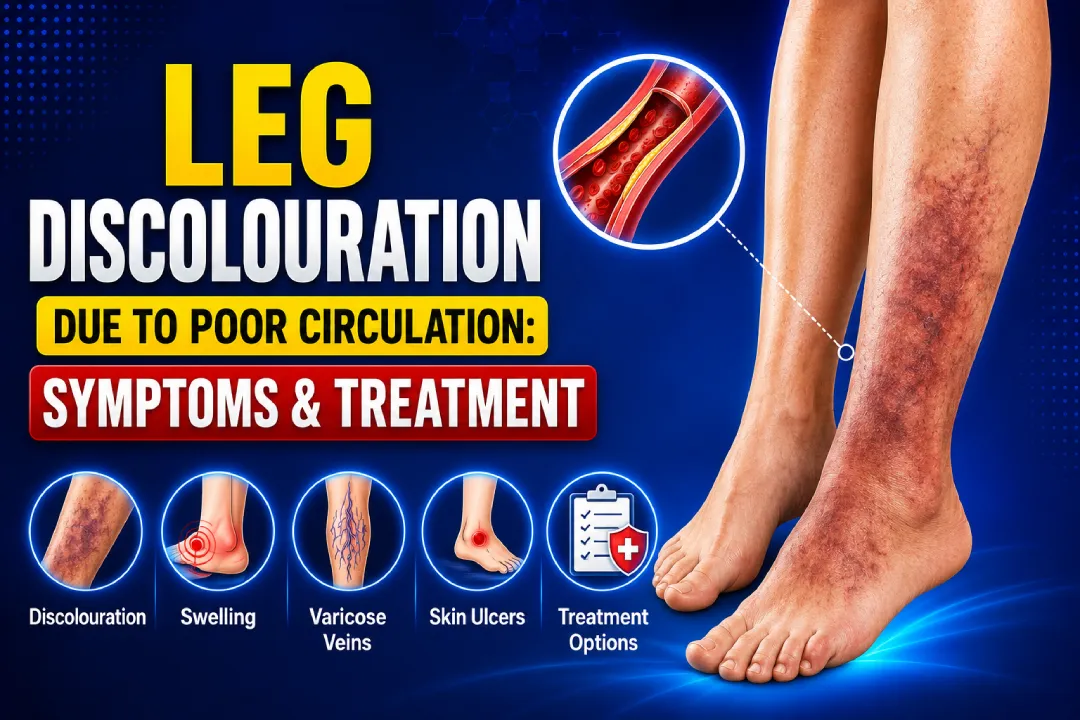
Leg discolouration is a widespread disorder that affects people of all ages. It usually manifests itself through dark patches on the legs, brown skin spots, reddish discolouration, and sometimes leg blackening. Though not always dangerous, the condition may be a sign of some other skin or blood vessel problems and require proper diagnosis and treatment.
Most patients overlook slight changes in their legs until their legs turning black. Proper identification and management of the disorder can significantly improve outcomes and prevent complications. This blog explores the detailed information on leg discolouration.
What Is Leg Discolouration?
Any change in the normal skin colour of the legs indicates leg discolouration. Such changes can be expressed as increased pigment presence, resulting in skin darkening, reddish-brown colouring, purple discolouration, and black discolouration.
Skin changes may be localised or cover larger parts of the legs. Depending on the degree of skin discolouration, one may observe mild signs of the disorder or more pronounced manifestations, including edema, itching, pain, or ulcers.
Common Reasons For Leg Discolouration
Various medical and lifestyle factors can cause changes in leg skin colour. The black spots on legs cause severe damage to your skin. It depends on what is happening beneath the surface.
1. Slow Blood Flow
A major cause of discolouration is poor blood circulation. When the blood flow gets sluggish, the tissues receive less oxygen so that the skin can look darker and swelling may show up too.
Chronic venous insufficiency often leads to blood pooling in the legs and that pooling can result in noticeable pigmentation changes over time.
2. Varicose Veins
Varicose veins occur when veins stretch, enlarge, and twist because their valves are weaker than they should be. Over time, pressure builds up within those veins. It results in darkening of the skin around the ankles and calves.
You can get better information by reading the varicose veins guide. You should know that untreated varicose veins might quietly lead to lasting skin damage and ongoing discomfort.
3. Deep Vein Thrombosis
Deep vein thrombosis is a serious condition in which clots form in deep veins, most often in the legs. DVT may cause swelling and a clear shift in skin colour.
If DVT symptoms are ignored, complications can become dangerous, including pulmonary embolism. Getting timely DVT treatment in Mumbai matters because it can reduce the risk of severe outcomes.
Symptoms Associated with Leg Discolouration
There might be differences depending on the cause of the leg discolouration. They include:
- Presence of dark brown or black marks
- Leg swelling
- Feeling of itchiness or burn
- Appearance of visible veins
- Dry skin or dryness
- Experiencing pain while walking or standing up
- Presence of open sores
- Tightness of the skin
- Tenderness in the affected parts
Some people have leg discolouration accompanied by a heavy, fatigued feeling in their legs.
Types of Leg Discolouration
- Brown Discoloration
This is due to chronic venous insufficiency leading to iron deposition in the skin from bleeding through the veins.
Several people experience brown skin discolouration on lower legs around the ankles, especially after prolonged standing.
- Dark Black Tissue Colouration
This is due to poor blood circulation which can cause tissues to darken and turn almost black in severe cases.
Patients suffering from dark or black legs must immediately consult a doctor since it is an indication of serious vascular disease.
- Dark Spots and Uneven Pigmentation
Small patches may develop because of inflammation, diabetes, an insect bite, or poor circulation.
Symptoms can include:
- Dark spots on lower legs
- Causes of black spots in legs
- Black pigmentation on legs
Leg Discolouration Caused by Poor Circulation
Poor circulation is the most common reason behind black skin on the legs.
This leads to:
- Fluid buildup
- Skin thickening
- Fluid leakage to the tissues
- Iron deposits that result in dark skin pigmentation
If not treated properly, leg discolouration due to poor circulation can be a lifelong problem.
Complications and Prevention of Varicose Veins
Some of the complications that can occur because of untreated varicose veins are
- Swelling of the limbs
- Skin ulcers
- Bleeding veins
- Formation of blood clots
- Constant pain
- Deep darkening of skin
Understanding varicose veins complications and prevention is important for maintaining long-term vascular health.
Best Treatment Options for Leg Discolouration
The treatment for leg blackening depends on the cause.
1. Compression
Patients suffering from venous insufficiency or varicose veins may benefit from compression stockings as they facilitate improved circulation and prevent any swelling.
2. Drugs
Prescribed drugs include:
- Anticoagulants
- Antibiotics
- Anti-inflammatories
- Skin depigmenting creams
3. Lasers
Lasers are effective in treating visible veins and improving the overall appearance of the skin.
4. Sclerotherapy
This is an outpatient procedure that works by closing damaged veins, hence promoting better circulation.
5. Lifestyle Modifications
A healthy lifestyle is key in the process of recovery which includes
- Regular exercise
- Proper weight management
- Limited salt consumption
- Avoiding smoking
6. Surgery
For severe vascular problems, surgical removal or repair of damaged veins is necessary.
Tips For Healthy Leg
Proper circulation is vital to avoid skin discolouration on legs.
- Leg Health Tips
- Stay active
- Do not sit down for too long
- Wear good footwear
- Use lotion on your skin
- Watch out for diabetes
- Go for vascular checks
Immediate action will prevent minor skin discolouration from becoming a major problem.
Wrapping It Up
The black pigmentation on legs is a potential sign of an underlying issue with the veins or skin. It should not be taken lightly under any circumstances. Proper diagnosis and treatment will not only keep complications at bay but also restore your skin tone and the overall health of your legs. If you have noticed any issues with your legs such as discolouration or other similar problems, you need to see a doctor. At Dr Kunal Arora’s clinic, patients will benefit from advanced diagnosis and treatment solutions for all their vein-related disorders. He stands out as the best varicose veins doctor in Mumbai. He focuses on providing his patients with the best treatment and the utmost care. Consult with Dr Kunal Arora and regain control of your legs’ appearance.