Living with an enlarged thyroid or goitre is a real struggle. Many patients continue taking medicines forever while staying anxious about the idea of undergoing conventional surgery. Because of this, more patients are looking for simpler yet safer alternatives.
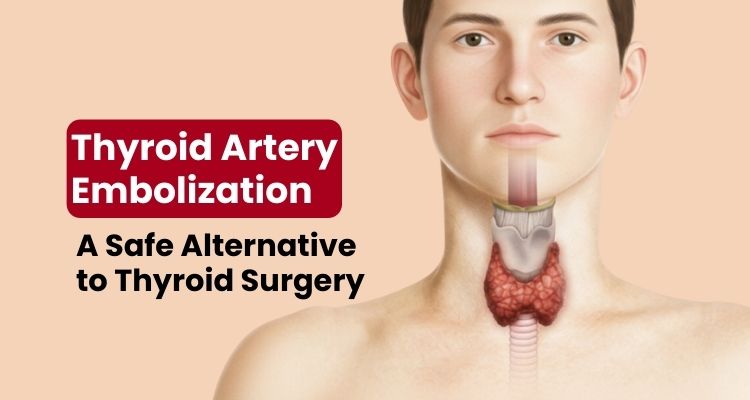
One such modern thyroid surgery alternative is Thyroid Artery Embolisation (TAE). This simple medical procedure shrinks the thyroid, eases symptoms and supports a smoother recovery. The best part is that it does not feel as intimidating as traditional surgery.
Many patients appreciate how this targeted procedure focuses on improving comfort and overall well-being through a simple and precise approach that suits their needs. Let’s look at how thyroid artery embolisation opens a safer path for those seeking dependable treatment without major surgery.
What is Thyroid Artery Embolisation (TAE)?
Thyroid artery embolisation is a minimally invasive procedure performed to reduce the size of a goitre through controlled blockage of the arteries supplying the thyroid gland. This method uses tiny particles that occlude the feeding arteries and create a steady decline in thyroid volume. Patients experience a gradual reduction in discomfort because the gland begins shrinking over the following months.
Thyroid embolization for thyroid nodules is quite different from open surgery in that the procedure aims at minimising the blood supply rather than removing the thyroid tissue. A lot of candidates say that their breathing becomes more comfortable, swallowing is easier, and the cosmetic appearance gets better as the gland is reduced in size. This gradual and organic reduction allows the body to adjust in a comfortable manner over time.
Why Consider Thyroid Artery Embolisation
For many years, traditional surgery has remained the standard treatment for enlarged goitres or thyroid nodules. Patients with medical risks, cosmetic concerns or age-related challenges often seek safer options that avoid a lengthy recovery.
TAE has some very attractive advantages for patients to consider as an option, including:
- Avoid large cuts
- Can be completed under local anaesthesia
- Promotes a consistent reduction in thyroid size
- Supports quicker return to regular activities
- People who prefer gentle approaches appreciate this because it puts minimal stress on the body.
Understanding Thyroid Artery Anatomy and Embolisation Technique
The interventional radiologist begins TAE by carefully assessing the anatomy of the thyroid arteries. Such mapping permits the specialist to identify which arteries feed the goitre. Accurate mapping helps the specialist in correctly positioning the particles in the course of the procedure.
- A small catheter is inserted into a blood vessel through a tiny puncture in the groin or wrist area.
- The radiologist directs the catheter toward the thyroid arteries using imaging equipment that outlines the actual motion.
- Small medicinal particles are delivered through the catheter and these particles occlude the selected vessels.
- The occlusion decreases the blood supply and facilitates the gradual shrinkage of the thyroid gland.
These new techniques in thyroid treatment have become recognised in specialised centres that treat symptoms of goitre, as well as more unusual conditions like thyroid artery aneurysm, based on similar principles of embolisation.
How Thyroid Artery Embolisation Works: A Step-By-Step Explanation
TAE is completed in clinics or hospitals that support image-guided procedures. Many patients feel relieved once they learn that the method avoids large cuts and relies on precision instead of removal.
Detailed Process
- Assessment and Planning
The anatomy of the thyroid arteries is studied by doctors using ultrasound or computed tomography. These images serve to locate the inferior thyroid artery or other branches that supply the gland.
- Accessing the Artery
A small catheter is inserted into the bloodstream through a groin or wrist puncture site, thereby providing access internally without the need for open surgery.
- Guiding the Catheter
Real-time X-ray imaging helps the radiologist place the catheter precisely where the thyroid gets its blood supply.
- Delivering the Particles
Small particles designed for medical purposes are injected to block the arteries supplying the thyroid gland. The obstruction promotes a gradual volume decrease.
- Completion and Recovery
The catheter is removed and the puncture site is sealed. Patients can usually go home after staying a few hours or overnight in the clinic.
This limits disturbance to surrounding tissues and stimulates a controlled decline in thyroid size through reduced arterial flow.
Benefits of Thyroid Artery Embolisation
TAE is considered attractive to patients because it offers significant improvement via a minimally invasive approach. Key thyroid embolization benefits include:
- Fewer complications compared to open surgery.
- Gradual shrinkage of the thyroid gland allows for improvement in breathing and swallowing.
- Suitability for toxic diffuse goitres or nodules.
- Faster recovery periods.
- Completion without general anaesthesia
- Protection of sensitive structures such as parathyroid glands and vocal cords.
Many find this to be a better option since it supports both comfort and confidence during recovery.
Risks and Possible Complications
TAE is considered a safe option in experienced hands, although every medical procedure carries some level of risk. Possible complications include:
- Temporary discomfort or swelling around the neck
- Minor bleeding at the catheter insertion site
- Rare injury to adjacent arteries or tissues
- Occasional incomplete embolisation
Studies have shown excellent safety outcomes for TAE, in particular if performed by trained interventional radiologists.
Comparison of Thyroid Artery Embolisation and Surgery
The major difference between thyroid surgery and embolization is that a conventional thyroidectomy is a method that can be trusted. However, the operation still has some risks for the patient, such as an unsightly scar, nerve damage, and the necessity of hormone supplementation for life. However, the advantages offered by TAE to eligible candidates are huge
- A less invasive alternative
- Lower complication risks
- Shorter hospital stays
- Scar-free results
Some patients with extremely large goitres or suspected cancer still require surgery. Specialists help in determining which treatment best aligns with each patient’s condition.
Who Can Benefit Most from TAE
Candidates ideal for thyroid artery embolisation often include:
- People with pressure symptoms due to the size of the goitre
- Individuals who face surgical risks due to age or medical issues
- Scar-free option preferred by the patients
- Those who deal with toxic diffuse goitre or nodules that resist medication
Doctors evaluate each case to confirm eligibility for TAE.
Alternatives to Thyroid Artery Embolisation
Other treatments for goitre or thyroid nodules are available. These may be suitable for the patient, depending on the diagnosis and medical advice:
- Thyroid Radiofrequency Ablation: This is a minimally invasive procedure that uses heat to shrink nodules.
- Microwave ablation applies electromagnetic energy for the treatment of nodules.
- Thyroid ablation with ethanol in selected cases like cystic nodules.
Summing Up
A minimally invasive procedure like thyroid artery embolization gives many patients relief because it brings meaningful improvement without the challenges of conventional surgery. This approach is gaining trust, as patients experience a continuous improvement in breathing, swallowing, and overall health. Interventional Radiologist in Mumbai, Dr. Kunal Arora, has years of experience in carrying out advanced embolisation procedures, supporting safer recoveries with dependable results. Any person seeking clarity or wishing to undergo the TAE procedure can book an appointment with Dr. Kunal Arora today!