Have no idea what happens after you undergo varicose vein surgery? You aren’t alone! Many people feel anxious because they are unaware of the healing phase. This is why it is essential to understand the varicose vein surgery recovery process before anything.
Knowing what to do and what not to do enables you to experience a smoother healing journey and get back to your routine as early as possible. Hence, we’ve come up with a varicose veins guide that explains the whole recovery process in simple words so that you can make arrangements and schedule your plans accordingly.
About Varicose Vein Surgery
Varicose vein surgery is all about minimally invasive treatments that address twisted veins and relieve symptoms associated with them. These problems include pain, heaviness, and changes in skin texture or colour.
The primary purpose of varicose vein surgery is to treat these damaged veins. It improves their function, reduces discomfort, and prevents the condition from getting worse. When surgery is done once the varicose veins early stage symptoms are noted, patients can recover faster.
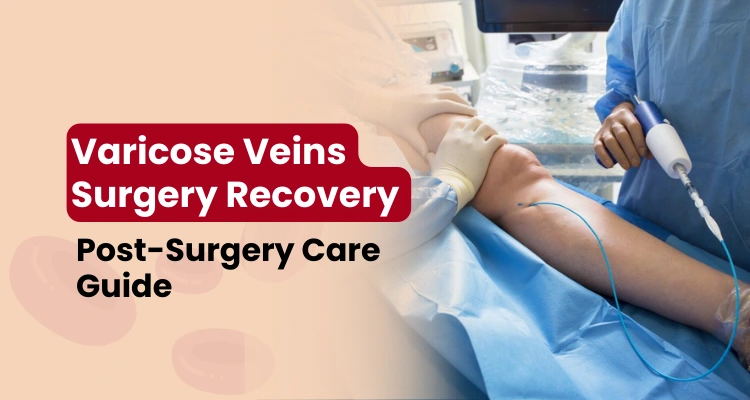
These procedures generally take 35-40 minutes, and most often they are done under local anaesthetic so that the patient stays comfortable. Vein stripping, endovenous laser treatment and radiofrequency ablation are a few of the options and which one is used will be based on the severity of the condition.
Endovenous Varicose Vein Surgery Aftercare
Here are some common aspects you can expect with varicose vein surgery aftercare.
– Understanding Post-Procedure Care:
Every patient receives anaesthesia to make the treatment comfortable. This may be a local anaesthesia, light sedation, or general anaesthesia. The recovery after varicose vein surgery is generally quick and the majority of people are allowed to leave the clinic after a few hours.
You are recommended to have someone accompany you on the first day for support, as you may feel a little drowsy due to the effects of the anaesthetic.
– Dressings and Stockings:
Bruising is managed, and gentle pressure is given over the treated spot with light wool and crepe bandages. Bandages can be taken off the following morning and replaced with the provided stockings.
Compression stockings after varicose vein surgery should be worn day and night for the first week and during daytime hours for the second week. Loose bandages are not a cause of worry, and stockings can be used earlier in that case.
– Bruising and Lumps:
Some patients may observe bruising along the line of the veins. This bruising varies from individual to individual but is usually around the sites where larger veins have been removed.
A firm, cord-like area may also be felt when treated veins heal. Both the bruising and this lumpy sensation will resolve within a few weeks. Patients with extensive bruising may continue to wear stockings to make the healing process easier.
– Wound Care:
Small incisions of the leg are closed with small Steri-Strips rather than sutures. These strips often loosen during changes of dressings or with the wear of stockings. Strips that remain after two weeks can be gently removed in the shower or bath. Careful drying of the skin keeps the area comfortable while it heals.
– Pain and Discomfort:
Most people experience mild pain similar to that from bruising. Simple painkillers, such as paracetamol and ibuprofen, will generally alleviate this. Those patients who have had extensive surgery may experience a more severe ache, particularly in the second week.
This usually settles with simple analgesia. Severe or lingering pain should be brought to the attention of the varicose veins doctor in Mumbai or anywhere you undertake surgery.
– Residual Veins:
Some veins cannot be completely removed and may remain after surgery. Extra sessions are often needed to achieve better cosmetic outcomes in the case of thread veins or spider veins. For this reason, surgeons usually suggest varicose veins diagnosis and treatment to explain these possibilities before the treatment to set realistic expectations.
– Bathing and Hygiene:
You may resume bathing and showering after 48 hours. Immersion of the legs in the water should be avoided, and plasters should be dried carefully. Brief contact with water will not harm as long as the area is thoroughly dried.
– Movement and Activity:
Normal activity reduces the varicose veins complications and preventions of conditions like pulmonary embolism (PE) or deep vein thrombosis (DVT). Light walking and regular body movements promote adequate blood circulation. However, swimming should be avoided for the first 48 hours or a few days.
What Are the Restrictions After Varicose Vein Treatment?
Knowing what to do after varicose vein surgery and understanding the restrictions are equally important for safe healing. Some of the common limitations are discussed below.
– RF and Laser Ablations:
Strenuous activities like running, cycling, doing crunches, and lifting heavy weights need to be avoided for at least a week. The heaviness of the activities that press the blood into the treated vein can be very dangerous, and thus, the efficacy of the procedure will be hindered.
The area of the small incision should be kept clean and dry. It is allowed to take a shower after two days, but soaking the treated part should be avoided for seven days.
– Ambulatory Phlebectomy:
Heavy physical activity is restricted for a week. Small cuts along the path of the bulging vein should be kept protected for at least two days. It is a must to keep the area free from wetness to reduce the chance of getting any infections.
– Sclerotherapy:
For the following week, avoid strenuous activity and heavy lifting. Prolonged periods of standing or sitting should be avoided. Treated legs should not be soaked for 48 hours to maintain the effectiveness of the medication used in the veins.
When to Seek the Support of a Vein Doctor?
- A very strong and unbearable pain that does not relieve with simple medications
- If the swelling becomes sudden or if it increases a lot, and it is hard to see the operated area
- If the redness or the warmth of the skin around the incision is noticed, it indicates an infection
- If the bleeding is continuous or if there is an unusual discharge from the incision
- If you experience fever or chills suddenly
- Numbness, tingling, or unusual sensations in the leg
- Difficulty walking due to discomfort
- Bruising that worsens or discolouration spreading
- Symptoms that persist longer than the expected varicose vein treatment recovery time
Benefits of Proper Recovery
When you follow aftercare guidance properly, you can make the most of your varicose vein surgery. You can experience
- Faster healing of the treated veins
- Reduced chance of clot formation
- Reduced risk of infection
- Improved comfort in daily activities
- Better long-term circulation
- Smooth improvement in skin appearance
- Reduced frequency of symptoms
- More predictable cosmetic results
- Increased confidence owing to the improved appearance of the legs
- Better overall result from the selected treatment
To Sum Up
Still, do you doubt that can varicose veins come back after surgery? With proper medical guidance and follow-ups, you can see the settling of the treated veins, which helps you get back to your routine with confidence.
Expert care adds immense value in this regard, while support by a specialist makes the entire process much more reassuring. Dr. Kunal Arora is a professional interventional radiologist in Mumbai, offering advanced solutions with minimally invasive treatments supported by strong clinical expertise.
Book an appointment today to receive personalised varicose vein surgery and a smoother recovery experience!